
We will focus on using blockchain as an artistic medium to drive critical conversation—conversations around blockchain's shortcomings and potential.


Master's or above

Web3 adoption

success (even if not directly
Web3/blockchain related)
research teams



Artist and Legal Scholar, Harvard University
Primavera De Filippi
Primavera is an artist and legal scholar at Harvard University, exploring the intersection between art, law and technology, focusing specifically on the legal and political implications of blockchain technology. Her artistic practice instantiates the key findings of her research in the physical world, creating blockchain-based lifeforms that evolve and reproduce themselves as people feed them with cryptocurrencies.
LinkedIn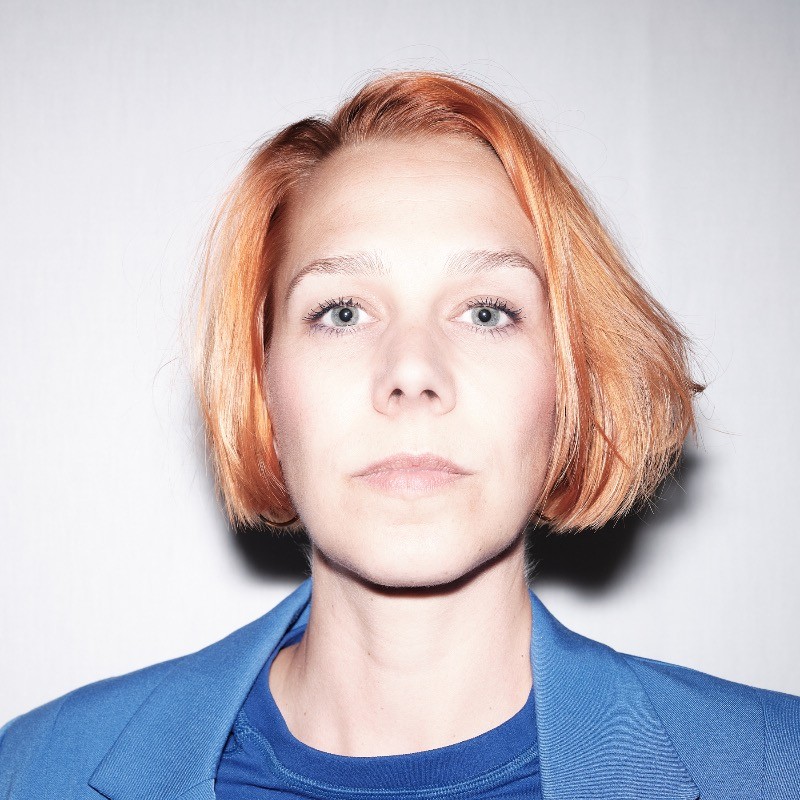
Head of Program and Curator, HEK Basel
Dr. Marlene Wenger
Curator and researcher based in Bern, Switzerland, who studies how digital technologies in the 21st century influence the production, perception or distribution of contemporary art. Her curatorial work deals with topics such as artificial intelligence, online self-representation and body images in social media. In her PhD project, she examined exhibition displays of postdigital artistic practices in physical and virtual spaces. She is currently employed as head of program and curator at HEK (House of Electronic Arts) in Basel.
LinkedIn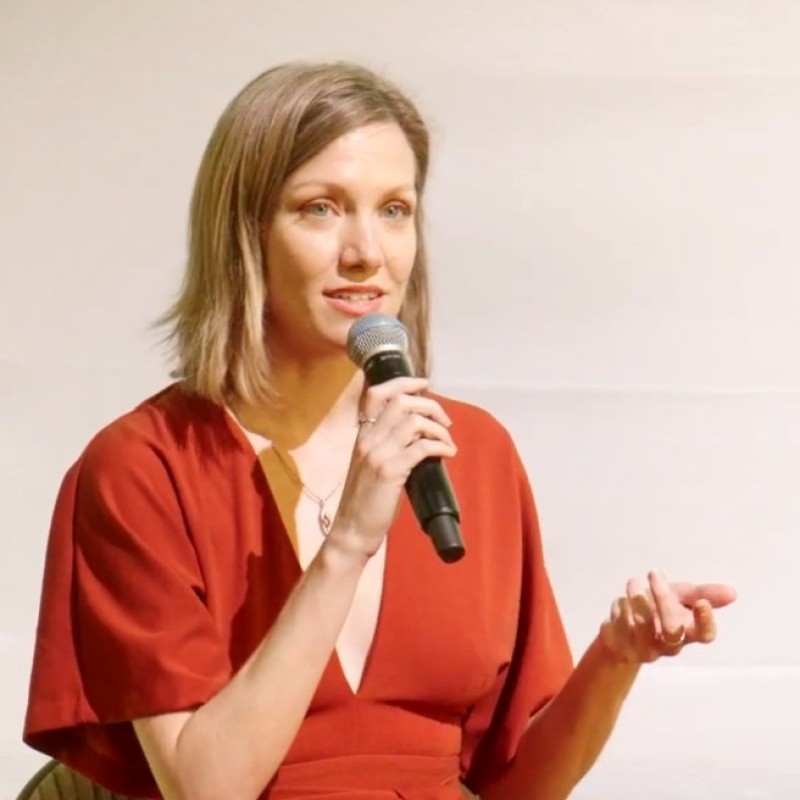
Digital Art Curator, Founder of Breezy Art
Eleonora Brizi
Digital art curator, specializing in blockchain art, while also focusing on generative AI. Founder of Breezy Art, co-founder of 100 collectors, curator at MakersPlace. She graduated in contemporary Chinese art and worked for several years in Beijing with artist Ai Weiwei. In 2018, she relocated to New York and shifted her focus to developments in the field of art and technology. As one of the first curating presences in Web3, Eleonora spearheaded many of the earliest Cryptoart projects. Today, she continues to curate and lead web3 and digital art initiatives.
LinkedIn
Director of Growth, Avara
Maria Paula Fernandez
Argentinian/Italian, relocated to Germany (Berlin) in March 2013. Currently working as Director of Growth at Avara. Maria Paula has been the co-founder and COO at Juried Protocol Galleries LTD (JPG.space) based in Berlin. Founder and former Managing Director of ETHBerlin/ Department of Decentralization. Other past experience includes Golem, a Blockchain project aiming to create a decentralised marketplace for computing power.
LinkedIn
Software Engineer, Artist
Ioannis I. Bardakos
Iannis Bardakos is an artist, a metaphysicist, and a hunter-gatherer of form and non-localities. His theory-practice unfolds through cybernetics, speculative philosophy, and technoetic processes, where he constructs ontologies and conjures mutable formalisms. He holds a double PhD from the School of Fine Arts of Athens and from Paris 8 University.
Website
Artist and Researcher
Paul Seidler
Paul Seidler is an artist and researcher based in Berlin, whose work traverses networks — from creating protocols to deploying decentralized and peer-to-peer interventions. In 2020, he graduated from the University of the Arts Berlin in the class of Prof. Joachim Sauter. Since 2015, he has been working with blockchain-based technologies to investigate questions of value, ownership and encryption, thereby creating a body of onchain work using self-written smart contracts, zero-knowledge circuits and token-based protocols.
Website
Pseudonymous Artist
Oxfff
Working with smart contracts and distributed systems. Their projects treat blockchain protocols as both material and site for art-making—creating long-running works that run as autonomous programs, accumulate endless todo lists, or map their own movement across networks. Through exhibitions like World Computer Sculpture Garden—a pure show of contracts and a show as contract itself—they explore computation not as a tool but as the thing itself. Part systems art, part poetic experiment, their practice playfully investigates alternative ways of understanding computation, from protocol art to collaborative, dynamic environments.
Websitewith subject line "Pixel Prize Application"


Can the publications I submit be in German?
Do I need to be affiliated with a German institution?
Do I need to be based in Berlin to apply?
What if I miss the deadline?
Got more questions?


